

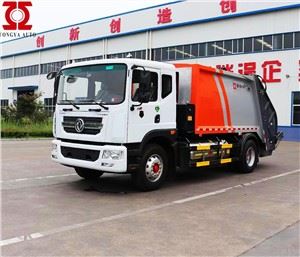
What is Garbage Truck
Other common names for this type of truck include trash truck in the United States, and refuse truck, dustcart, junk truck, bin wagon or bin van elsewhere. Technical names include waste collection vehicle and refuse collection vehicle (RCV). These trucks are a common sight in most urban areas.
Efficient Waste Collection
Garbage trucks are designed for efficient waste collection, helping to keep communities clean and hygienic.
Maximising Payload
The hydraulic compactors in rear-loader trucks and the loading mechanisms in front-loader trucks help maximise the amount of waste that can be transported in a single trip, reducing the need for frequent trips to disposal sites.
Versatility
Different types of garbage trucks cater to various waste management needs, ensuring that waste is collected from a wide range of sources, from residential areas to industrial sites.
Reduction of Manual Labor
Automated garbage trucks equipped with mechanical arms or grabbers reduce the physical strain on waste collectors, making the job safer and more efficient.
Environmental Benefits
Some garbage trucks are powered by alternative fuels like natural gas or electricity, reducing their carbon footprint and contributing to a cleaner environment.
Safety
Garbage trucks are equipped with safety features to protect both the operators and the public, such as backup cameras and warning lights.


Why Choose Us
Our Factory
Tongya Automobile Co., Ltd. is listed among the appointed enterprises authorized by the Development and Reform Commission of China (formerly the Economy and Trade Commission of China). We are the first cooperative enterprise whose products are listed in the Public Notice on automobile refitting management. We specialize in full-size truck trailer manufacturing, integrating product design, scientific research and development, production, and sales.
Our Products
Our leading products include Tongyada brand semi-trailers, bulk cement tanker semi-trailers, fuel tanker trucks and trailers, flatbed semi-trailers, side wall semi-trailers, fence semi-trailers, low bed semi-trailers, tipper semi-trailers, water tank trucks, road sweeper trucks, and garbage collection trucks.
Product Applications
Cement tanker semi-trailer: Used for transporting cement from cement plants to mixing stations.
Fuel tanker semi-trailer: Used for transporting fuel from oil companies or oil depots to fuel stations.
Flatbed semi-trailer: Used for transporting containers, sand, stone, bagged goods, pallets, fruits, vegetables, etc.
Our Certificates
"Taishan Quality" Certificate, Certificate of High & New Technological Enterprise, Environmental Management System Certification, Occupational Health Safety Management System Certification, China Famous Brand, Export Enterprise Registration Form, CCC
What Happens Inside a Garbage Truck
A garbage truck, also known as a trash truck, waste truck, or refuse truck, is a specialized vehicle designed to collect and transport municipal solid waste to a disposal site, such as a landfill or recycling facility. Here is an overview of what typically happens inside a garbage truck during its operation:
Collection of Waste
Garbage trucks are used by waste management companies or municipal sanitation departments to collect garbage from residential, commercial, and industrial areas. Workers or automated systems load the waste into the truck's hopper or compactor.
Compaction
Many garbage trucks are equipped with compactors that compress the waste to make more room for additional trash. This compaction process helps maximize the amount of waste that can be transported in a single trip, reducing the number of trips needed to empty the truck.
Transportation
Once the waste is loaded and compacted, the garbage truck transports it to a designated disposal site. Depending on the type of waste and local regulations, the truck may be headed to a landfill, recycling facility, composting facility, or waste-to-energy plant.
Disposal
At the disposal site, the garbage truck unloads the waste by either tipping its container or using a hydraulic system to empty the compactor. The waste is then processed according to its type: recyclables are sorted for recycling, organic waste may be composted, and non-recyclable waste is typically disposed of in a landfill.
Cleaning
To maintain hygiene and prevent odors, garbage trucks are often equipped with washing systems that clean the interior of the truck after unloading the waste. This helps ensure that the truck is ready for its next collection route.
Types and Characteristics of Garbage Truck
Garbage truck can be divided into:compressor garbage truck,hang bucket garbage truck,swing garbage truck,sealed dump garbage truck and docking garbage truck.
Compressor garbage truck
Compressor garbage truck used mechanical and electrical integration of liquid technology, main compartments, filling machine, pushing through garbage shovel, hydraulic system and so on special device, with automatic control system of machine, electricity, liquid, by car, fill in and pushing shovel device such as a dedicated and realize the rubbish into, crush, or crushed, strong packing, put the rubbish into carriages, compaction, and discharge function.
Its main characteristics are simple and efficient garbage collection method, automatic repeated compression and peristaltic compression function, high compression ratio, large loading quality, operation automation, power, environmental protection, high vehicle utilization efficiency, good sealing characteristics.
Compressor garbage truck function and characteristics are very practical, this type of garbage truck in all aspects than other similar sanitation vehicles are better, its full seal structure effectively avoid the secondary pollution of garbage, and the load than the same tonnage of many more, cost-effective, is the future development trend.
Hang bucket garbage truck
Hang bucket garbage truck usually used with street garbage bins, its biggest characteristic is can grab rubbish bin automatically, promotion, dump, put down.The whole operation of the driver is completely completed in the driving room, with high efficiency. It is usually used for garbage collection and application in garbage bins on both sides of the street.
Hang bucket garbage truck can matched with several garbage bins, circulation transport, fully improve the transport capacity of the vehicle, especially suitable for short-distance transport, such as sanitation department of urban garbage cleaning, transport.At the same time, hang bucket garbage truck can also add other functions, the formation of other multi-function hang bucket garbage truck, such as: hang bucket compression type garbage truck, hang bucket type slop garbage truck, hang bucket type butt garbage truck.
Swing garbage truck
Swing garbage truck usually equipped with one or more rubbish bucket, the only difference is the rubbish bucket up and down in a different way, swing arm garbage truck is through two swing arm pendulum is on or the rubbish bucket, and arm type garbage truck arm by hydraulic cylinder to drive, or down to the rubbish bucket is pulled, the two models are suitable for waste transfer station in the city, village, schools and other places, convenient and quick.
Sealed dump garbage truck
Sealed dump garbage truck has the function of garbage collection, transfer clean transportation, avoid the secondary pollution of sanitation vehicles, new its main characteristic is garbage collection way is simple, efficient, environmental protection, high utilization efficiency of the vehicle, widely applicable to apply to the sanitation, municipal, factories and mines enterprises, property management community, waste garbage disposal and concentration of residential areas, and through the city streets, have sealed dump function, hydraulic operation, dump garbage and conveni.
Docking garbage truck
Docking garbage truck also known as garbage compression station docking type garbage truck.It is a special vehicle used for garbage transfer and unloading operations in urban garbage compression station.
Compression and refuse in the garbage compression into pieces after the garbage box body vertical lift, and open the box compression discharge door, rotate and open the back up when the garbage truck enclosure, garbage truck back door and compression box back door docking, garbage is compressed in the piece of push board level after advancing into garbage trunk, closed after finish loading garbage truck back door, the garbage to the garbage dump.
The ducking garbage truck is currently widely used in China garbage compression station garbage transfer mode, can realize a car more than one station, greatly reduce the equipment cost and space and so on.The functions of the special device are all driven by the automobile engine and realized by manual or electronic control of the hydraulic mechanism and air control.The box body of the vehicle adopts high-quality carbon steel plate fully sealed welded structure, which has the advantages of high strength, light weight and no secondary pollution.
How Does a Garbage Truck Work
Collection
The garbage truck is driven to residential or commercial areas where waste needs to be collected. Workers load the garbage into the truck either manually or using mechanical arms.
Compaction
Once the garbage is loaded into the truck, a hydraulic compactor is used to compress the waste, reducing its volume. This compaction process allows the truck to carry more garbage before it needs to be emptied.
Transportation
After the waste is compacted, the garbage truck transports the garbage to the designated waste disposal facility. The truck may make several stops to pick up waste from different locations before heading to the disposal site.
Dumping
At the disposal facility, the garbage truck either tips its container or compactor to unload the waste. Some trucks have a hydraulic lift that tilts the container to empty it, while others have a rear-hinged hopper that opens to release the compacted waste.
Cleaning
After the waste is emptied, the inside of the truck may be cleaned to remove any remaining debris or odors. This helps maintain hygiene and prevents the spread of diseases.
Maintenance
Regular maintenance is essential to keep the garbage truck in good working condition. This includes servicing the engine, hydraulics, compaction mechanisms, and other components to ensure the truck operates efficiently and safely.
Design of the Garbage Truck
Garbage trucks are available in five different varieties. They are a rear loader, front loader, roll-off and side loader. The manufacturing of these trucks involves a few essential steps:
Making the body shell
All the sides, top, rear, and body floor parts are cut, curved, and bent first. Two pieces of all these parts are sent to the sub-assembly area to weld together. Once the welding is complete, the sides of the truck are positioned on the sides of the body floor. The front and rear parts are added next to make the unit look like an empty box.
Installing the subassemblies
The operating parts of the truck are welded and installed in the next stage. Some of the components included in this process are packer blades, hopper cover, lift arms, front and rear torque cubes, fork assembly, and the tailgate.
Finishing the body
Once the operating parts are installed, the body lights are connected using electrical wiring. The engine sits in the front panel. The entire structure is now ready, and the body and chassis properly modified. They are slowly lifted and bolted in the truck frame rails.
A garbage truck is a specialized vehicle designed to collect municipal solid waste and transport it to a disposal site. The garbage truck market is experiencing steady growth due to increasing urbanization, population growth, and rising environmental concerns. The future outlook of the garbage truck market is positive, with a projected CAGR of 13.3% during the forecasted period from 2024 to 2031.
The rising awareness of sustainable waste management practices and increasing investments in waste management infrastructure are driving market growth. Technological advancements such as the development of electric and hybrid garbage trucks are also contributing to market expansion. These eco-friendly vehicles reduce carbon emissions and operating costs, making them highly sought after by municipalities and waste management companies.
The market forecast for garbage trucks indicates robust growth, with demand expected to increase as governments worldwide prioritize waste management and environmental sustainability. The latest market trends in the garbage truck industry include the adoption of advanced waste collection systems, smart waste management solutions, and the integration of IoT technology for efficient waste collection and disposal. Overall, the garbage truck market is poised for significant growth in the coming years.
Eight Garbage Truck Maintenance Tips
Develop a Preventive Maintenance Schedule
Regular maintenance is key to garbage truck maintenance. Develop a schedule that involves regular inspections, maintenance, and repairs. Determine the frequency of maintenance and stick to this schedule. For example, you may want to schedule general garbage truck maintenance every 150 or 300 miles and more extensive maintenance every 2,500 to 3,000 miles.
Create a Preventive Maintenance Checklist
Your checklist should include a comprehensive inspection to cover all systems and prevent the need to repair your utility vehicle in the future. Be sure to include oil changes, filter changes, cooling system checks, electrical system checks, tire rotations, exhaust system checks, lighting checks, brake system checks, and more. For a complete list of garbage truck maintenance items, contact your local expert who specializes in heavy equipment repair.
Equip Drivers with Reporting Devices
As part of properly maintaining a garbage truck, drivers must complete daily inspections. Provide each driver with a checklist appropriate for this inspection. The checklist should include vehicle security systems, the interior and body of the truck, and other miscellaneous items, such as the radio.
Perform Body Maintenance
The engine and other system components aren’t the only parts to consider in garbage truck maintenance. It’s important to keep the body in top operating condition. These trucks take a beating in daily use, which can put stress on systems like forks, rollers, pins, and other moving parts of the body. Check metal parts for any cracks or other wear, and perform appropriate body repairs as soon as possible.
Maintain the Hydraulic System
This system is critical to garbage truck performance. Check these parts regularly for leaks or other issues. If you find any problems, take the truck to an experienced mechanic for utility vehicle repairs immediately.
Check Emissions
Emissions inspections can prevent more extensive utility vehicle repairs. Proactively check your emissions system to avoid future problems. Work with a trusted mechanic to have your emissions system checked regularly.
Maintain Brakes and Tires
Garbage trucks make frequent stops, so check your brakes regularly for wear. Check your tires daily for proper pressure and healthy tread depth.
Keep It Clean
Clean your truck regularly, both inside and out. This will prevent debris from building up, which can affect truck operation. It will also maintain your brand image and help improve driver morale.
Garbage trucks are an important part of cities. They help remove trash and keep streets clean, but most people don't know how these vehicles work. Here are some of the parts of a garbage truck:
The discharge plate
The discharge plate is the front end of the garbage truck where the truck dumps all of its trash. The discharge plate has small openings, called "chutes," that help suck out the trash and debris.
These chutes are connected to a conveyor belt system that takes the trash away after it's collected on the truck. This conveyor belt moves at an angle so that it can dump all of the trash into a container once you're done with it!
The tailgate
The tailgate is the back end of the truck that can be raised to dump the contents of the container. It's a large door that can be raised, while most doors open outward. The main purpose of this area is to facilitate dumping trash cans into the back of the truck.
The rear wheels are located on either side behind this area, and there are more wheels in the front that are driven by an engine located under your feet.
The compaction plate
The compactor plate is a large plate that compacts all of the dumped trash to make room for more trash. This is done by the garbage truck driver or operator, who uses their feet to push the garbage into the compactor chamber. The compactor plate is located at the front of the truck and is part of the way the garbage is transported in the truck, so you don't have to worry about touching any part of it!
The container cover opener
The container cover opener is a hydraulic arm that grabs at the containers used by various businesses or apartment buildings and opens them. This allows the garbage truck driver to lift the container up, remove it from its slot, and place it in their truck. The container cover opener is one of many parts that make up a modern-day garbage truck.
The container holding arm
The container holding arm is a long metal arm that holds up the containers on their sides as they are being emptied. It is attached to the body of the truck and used in conjunction with the container opener, which lifts up the top of each bin so that it can be removed.
The cover of an open top roll-off container
The cover of an open top roll-off container swings on hinges at a 90-degree angle so workers can load it with bulky items. The cover also swings up and down to allow workers to unload the container.
The Body
The body is the main part of the truck. Most of the cargo is stored here and then unloaded from the front and taken to a landfill or transfer station.
There are two doors on each side of the vehicle body, one for loading and one for unloading the garbage. The driver opens these doors by pulling a lever inside the truck's cab; this allows him to insert and remove trailers (also called "garbage collection trucks") that are specially designed to load garbage.
When these doors are open, they can be used as ramps so that workers can drive the trucks in without having to lift heavy objects by hand or use other mechanical equipment such as cranes or forklifts, which can damage the equipment if not done correctly!
Our Factory
Tongya Automobile Co.,Ltd is listed among appointed enterprises to produce and refit automobile approved by Development and Reform Commission of China ( former Economy and Trade Commission of China), the first cooperation enterprise with its products listed in Public Notice on automobile refitting for management. We are the full-size manufacture truck trailer enterprise which integrate the design of product, scientific research developing, production and sale together.


Certifications
"Taishan Quality" Certificate, Certificate of High & New Technological Enterprise, Environmental Management System Certification, Occupation Health Safety Management System Certification, China Famous brand, EXPORT ENTERPRISE REGISTRATION FORM,CCC


FAQ
We're well-known as one of the leading garbage truck manufacturers and suppliers in China. Please feel free to buy high quality garbage truck at competitive price from our factory. For customized service, contact us now.
fuel trailer, 18000l water tank, lowbed truck for hire