How To Hitch A Tractor To A Semi-trailer
How to couple a tractor to a semi-trailer
Hitching a semi-trailer is a skill that must be mastered by drivers engaged in drop-and-trail transport. Frequent pick-ups and hook-ups require attention to the details of the coupling process to ensure safe and efficient transport. What to pay attention to in the connection between the tractor and the semi-trailer? Perhaps each friend has a small experience and skills, but in order to better master this skill and improve the efficiency of each other's work, we specially collect and organize This can be considered as the most complete and comprehensive experience sharing of the semi-suspended connection process on the whole network.
 In the process of connecting the semi-trailer, the tractor must pay attention to the connection between the tractor and the semi-trailer, mainly in the connection between the traction seat and the traction pin and the connection of the electric circuit.
The connection between the traction seat and the traction pin
Let's talk about two components first:
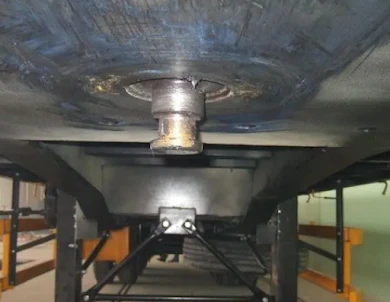
(1) Traction pin: On the semi-trailer
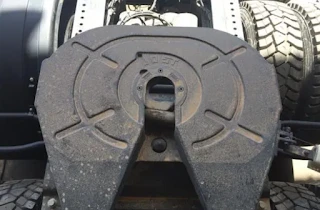
(2) Traction seat: On the tractor
● Connection steps
Before connecting, carefully check whether there is enough lubricating grease on the tractor's seatboard and whether there are other foreign objects on the traction pin and the semi-trailer's traction board, to ensure the cleanliness of the traction board.
Adjust the support legs so that the trailer tow board fits the height of the tow saddle. Generally, the trailer tow board is 1 to 3 cm lower than the centre position of the upper plane of the tractor tow saddle. Be careful not to be too high. Otherwise, sometimes it will not only fail to connect, but also damage the traction seat, traction pin and related parts.
2. Operate the traction seat locking mechanism so that the locking block opens and becomes a free state.
3. When the tractor is reversing, try to keep the centre line of the tractor and trailer consistent, and the distance between the centre lines of the two vehicles is limited to less than 40 mm. Align the tractor seat with the draw pin and slowly back up until you hear a "click", and when the locking block returns, the tractor and trailer are successfully towed.
4. Check that the traction seat locking block locks the traction pin and is firmly locked.
5. Move the tractor slightly forward to check that the connection is good.
6.Connecting the electrical circuit between the tractor and trailer
Once the trailer and tractor are connected to the saddle via the draw pin, can they be used directly? Of course not! After all, the circuit and brake system must also be connected.
The circuit system consists of :
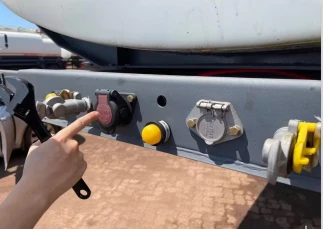
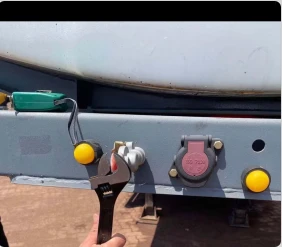
1. Connection piece - seven-pin plug;
2. Wire harness part - seven-conductor wire harness;
3. Lamp part - LED lamps;
4. Other components, such as ABS, anti-lock braking system or EBS, anti-skid system, reversing buzzer and reversing image, etc. (rare in China).
Connecting the circuit system is relatively simple. Insert the tractor cable connection plug into the seven-hole socket on the front of the trailer until it locks onto the seven-hole plug block, then check that the electrodes are connected and confirm the side, tail and other lights.Does it work normally.
Connecting the pneumatic system is a bit more complicated:
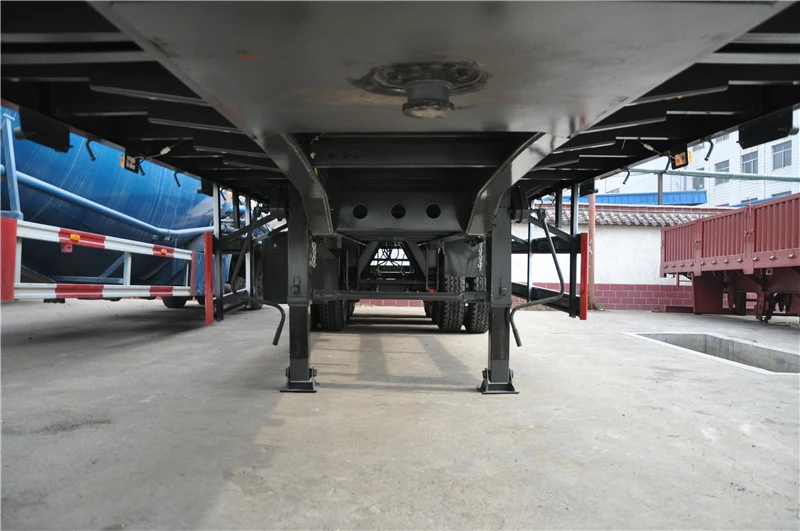
1. Connect the two gas hose joints (commonly called handshake) on the tractor to the two gas hose joints on the trailer. At this point, the air supply line on the tractor is connected to the air supply line on the trailer, and the control line on the tractor is connected to the control line on the trailer (pay attention to the colour of the connector: install it in the same colour, do not install it upside down).
2. Once the air joints are connected to each other, unscrew the trailer air circuit connecting switch on the tractor to make it vented, otherwise it will not be able to supply air to the trailer braking system, and the braking system will not work.
3. Start the engine, observe the pressure gauge in the cab and build up the pressure in the air reservoir of the tractor and trailer to the specified pressure.
4. Check for air leaks in the air system and check if the brake system is working normally.
I don't know if there are any new gains for friends of the card after reading our article? If you find it useful, please forward it and share it with your friends!